

The best decking for a boat dock should be able to withstand constant exposure to water and sun without becoming slippery, uncomfortably hot, or difficult to maintain. Pressure-treated wood remains a common choice, but modern composite and PVC decking have become increasingly popular for their long-term durability and lower maintenance requirements. In this guide, we’ll discuss wood, composite, PVC, and aluminum dock decking and compare the cost, weight, durability, maintenance requirements, comfort, and other factors to consider when choosing the best material for your dock.

What is marine-grade decking?
While “marine-grade” can be a specific designation for certain materials, such as marine-grade treated lumber and plywood, it isn't an official industry-wide classification for all decking materials. When used to describe decking, the term generally refers to materials designed to withstand the wet, demanding conditions found on docks, marinas, and other structures built over or near water.
What wood is best for boat decking and docks?
Wood has long been a popular choice for boat docks because it can be inexpensive, readily available, relatively easy to work with, and offers a traditional appearance. However, wood decking requires regular maintenance to help protect it from moisture, UV exposure, and rot. As wood weathers, it can also crack, splinter, and develop rough surfaces, creating a potential hazard for bare feet, characteristics that are especially important to consider on docks. Marine-grade plywood is designed to withstand moisture, but standing water can shorten its service life and encourage algae growth that creates slippery areas. The most common wood options include western red cedar, pressure-treated pine, and naturally durable hardwoods.

Pressure-Treated Pine
Pressure-treated pine is one of the most common and affordable wood options for dock decking. Preservatives help protect the wood against rot, fungal decay, and insects, but the boards can still crack, warp, and weather over time even with regular maintenance.

Western Red Cedar
Western red cedar is a softwood that is lightweight, attractive, and contains natural compounds that make it more resistant to rot and insects than most other untreated softwoods. But like pressure-treated pine, it will also require regular cleaning and sealing to extend its service life and maintain its appearance in demanding waterfront environments.

Hardwoods
Dense tropical hardwoods such as ipe and cumaru offer excellent strength and natural resistance to moisture, rot, and insects. Hardwoods can provide a long service life, similar to composites and PVC, but are one of the most expensive decking options. Their exceptional density also makes the boards heavy and more difficult to cut, drill, and fasten. Because they are the heaviest option, hardwoods are not a good choice for floating docks or docks that need to be removed and reinstalled seasonally. There may also be environmental concerns associated with tropical hardwoods, particularly when they're sourced from regions where illegal deforestation and unsustainable harvesting practices are prevalent.

Can you use composite decking on a dock?
Yes, composite decking can be used on a dock, provided you choose a product engineered to withstand the high-moisture conditions found around water and install it according to the manufacturer's requirements. Quality composite boards maintain their appearance and provide the strength, durability, and long service life needed for dock surfaces while resisting staining, rot, splintering, and other moisture-related deterioration common with traditional wood decking. Composite can also be a more sustainable decking choice; for example, Trex® decking is made from 95% recycled materials, including recycled plastic film and reclaimed wood.
What is the best composite decking for a dock?
The best composite decking for a dock is a durable, moisture-resistant product designed to withstand the demanding conditions found around water. Because docks are often exposed to direct sunlight with little shade, it's worth considering how hot composite decking gets when selecting a color and product. Darker colors of any material get hotter than lighter shades. It’s also important to choose decking that provides good traction when wet, since dock surfaces are frequently exposed to rain, splashing, and wet foot traffic. A more deeply embossed or textured surface can provide additional traction, but slip resistance varies by product, so check the manufacturer’s wet-traction or slip-resistance information when comparing decking for a dock.

Is PVC decking a good choice for docks?
PVC decking can also be a good choice for docks because its fully synthetic composition makes it virtually impervious to moisture, rot, and insects. In addition to conventional PVC deck boards, lightweight, hollow profiles are available specifically for docks and other marine applications. Like composite decking, PVC requires little maintenance and is available in a variety of colors and styles. When comparing PVC vs. composite decking, consider differences in cost, appearance, and sustainability. Composite decking typically contains a higher percentage of recycled material, while PVC decking is more commonly manufactured using virgin plastic.

Is aluminum a good choice for docks?
Aluminum is a durable, low-maintenance decking option that won’t rot, splinter, or absorb water, making it well suited for dock applications. It’s also lightweight and can provide good traction when properly textured. However, aluminum is typically the most expensive option. Aluminum can also be less installation-friendly than wood, composite, or PVC decking. Aluminum products can usually be cut with standard circular saws and carbide-tipped wood-cutting blades, but cutting aluminum can quickly dull blades and fastener holes may need to be pre-drilled. Cut edges can also be sharp and may need to be filed smooth to prevent injuries. Aluminum dock decking is also commonly sold as panels designed for proprietary dock systems rather than individual boards, so finding aluminum decking for custom dock frames might be difficult.
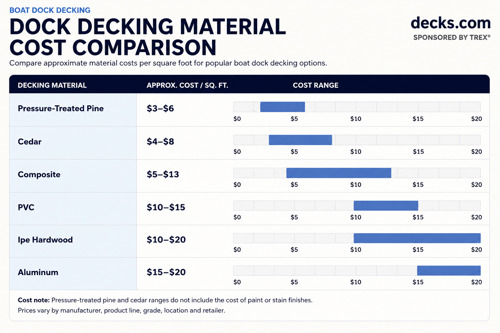
How much does dock decking cost?
The cost of dock decking varies considerably by material, with pressure-treated pine typically offering the lowest upfront cost and aluminum among the most expensive options. The following ranges represent approximate decking material costs and do not include framing, fasteners, accessories, or labor.
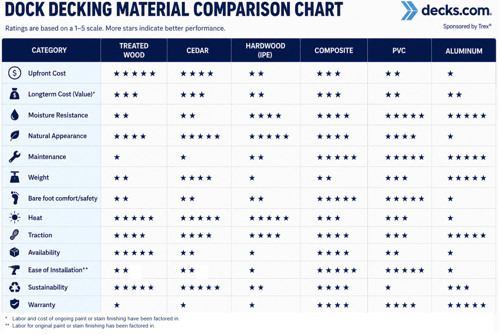
Comparing the Best Decking for a Dock
Choosing the right decking for a dock means weighing factors such as durability, maintenance, moisture resistance, cost, and comfort underfoot. Use the chart above to compare popular dock decking materials and see how each option stacks up.

FAQ: Common Boat Dock Material Questions
Have more questions about choosing materials for your boat dock? Here are answers to some common questions about dock decking, framing, maintenance, and performance.
Is Trex® decking good for docks?
Yes, Trex® decking can be a good choice for docks because it resists rot, splintering, and moisture-related deterioration while requiring less maintenance than wood. Products with SunComfortable™ Technology are also designed to absorb less heat, helping keep sun-exposed dock surfaces more comfortable underfoot.
Is composite decking slippery when wet?
Any dock surface can become slippery when wet, especially when algae, dirt or other organic material accumulates on it. When choosing composite decking for a dock, look for a product designed to provide good traction and follow the manufacturer’s cleaning recommendations.
How long does a composite dock last?
High-quality composite decking can last 25 to 50 years with proper installation and care, although the dock’s actual lifespan depends on the product and environmental conditions.
Are there special considerations for docks near the ocean?
Yes. Saltwater environments can accelerate corrosion. Marine-grade stainless steel fasteners and hardware are usually the best choice for securing decking near oceans.
What can I use instead of marine-grade plywood?
Because standing water is more common on a plywood surface, marine-grade plywood can remain wet, encourage algae growth, and become slippery. For dock decking, individual boards or panels that allow water to drain between them are generally a better choice. Wood, composite, PVC, and aluminum planks are all good alternatives.
What is the best decking for a floating dock?
Aluminum and hollow PVC can be good choices for a floating dock because, in addition to being highly resistant to moisture, they are also lightweight, which reduces the overall load on the dock’s flotation system. Heavier materials such as ipe are less suitable for most floating docks.
What is the best material for a boat dock frame?
Because of its strength and light weight, aluminum can be one of the best materials for a dock frame, especially for docks that need to be removed seasonally. Wood and galvanized steel are common materials for permanent dock structures.
How much does it cost to replace dock decking?
The cost of repairing a dock frame will depend entirely on how many repairs are needed. Just make sure the spacing between support members is appropriate. For example, composite decking typically requires joist spacing of 16 inches on center. See the chart above for prices on new dock decking boards.
Explore Boat Dock Ideas
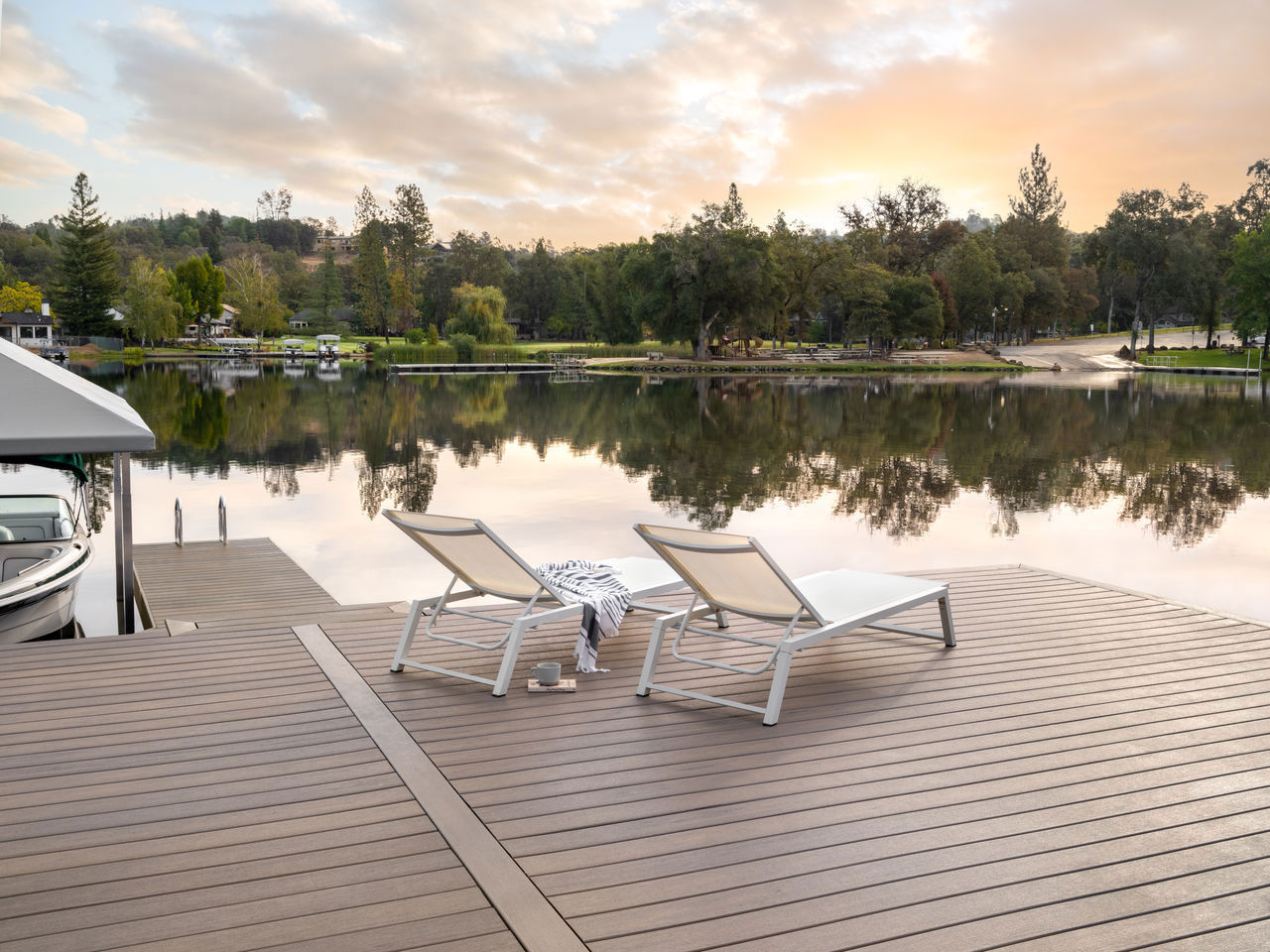
Looking for inspiration for your waterfront project? Explore these beautiful dock ideas to see how different decking materials, colors, and designs can transform your favorite outdoor space.